
More than peak power: a better power curve
Tuning starts with the car rather than a promised number. We calibrate for the engine version, condition, fuel and intended use, aiming to make better use of its hardware: stronger overtaking performance, smoother delivery and coordinated engine and transmission operation.
What changes during ECU tuning?
The ECU coordinates air and fuel delivery, injection, ignition and torque management. Depending on the engine, calibration adjusts load and torque targets, turbo control, mixture, injection and ignition parameters. These are connected systems; raising boost or changing one limiter alone is insufficient.
Operation throughout the usable rpm range and at different loads matters. Calibration must respond correctly to sensors and retain necessary diagnostics and protection. More power is no reason to ignore knock, excessive temperatures or insufficient fuel supply.
Condition checks before tuning
We establish the specification, existing modifications, software version and driver’s goal. Faults and live data are assessed, including air-system sealing, turbo control, fuel pressure, injection, ignition, temperatures and transmission behaviour as appropriate to the vehicle.
If a car underperforms on stock software, hesitates, leaks boost or has a slipping clutch, diagnosis comes first. Tuning cannot replace repair; additional load may expose problems that were less apparent in normal driving.
Stage 1 and Stage 2: what is the difference?
Stage 1 generally means calibration with the main factory hardware retained. Output is selected within the turbo, fuel system, cooling and transmission’s capacity. It can suit a healthy daily driver, but gains differ between models.
Stage 2 is calibration matched to specific hardware changes, which may include intake, charge cooling or fuel supply. Stage names are not a common technical standard: the specification and target define the work. Stage 2 does not inherently require removing a catalyst or particulate filter.
| Klausimas | Stage 1 | Stage 2 |
|---|---|---|
| Main hardware | Usually factory specification | Matched hardware upgrades |
| Programos tikslas | Use the existing hardware’s potential | Use the upgraded components’ capacity |
| Papildomi darbai | According to condition and model requirements | According to the planned hardware, cooling and load |
| TCU programavimas | Assessed for the transmission and torque | Assessed for the transmission and torque, not the Stage number alone |
Why gains differ between engines
The same displacement or similar model name does not guarantee the same components. Turbos, injectors, high-pressure pumps, cooling, ECU and transmission may differ. We confirm results for the exact version, not just its displacement or factory power.
Turbo engines often offer more scope for software gains than naturally aspirated engines. Hybrids also depend on integration between the combustion engine, electric drive, battery and system controls. Their outputs cannot simply be added; tuning potential is model-specific.
ECU and TCU must work together
The TCU can limit engine torque and request torque reduction during shifts. ECU changes alone may not deliver their full potential if transmission calibration limits torque. Accurate torque reporting also matters because the transmission uses it to control clutches and shifts.
Not every car needs TCU tuning. Stock software may remain where torque and operating conditions stay within suitable limits. If changes are required, we consider torque, shifting and mechanical condition together. Software does not strengthen a worn or mechanically limited transmission.
Fuel, temperature and sustained load
Petrol calibration is matched to agreed fuel. Unsuitable octane can cause knock or make the ECU reduce load. A best-case run is not a forecast for every condition. Effective charge-air cooling matters for power and repeatability.
Brief acceleration and sustained high load are different demands. Track or intensive use may require charge-air, oil, engine and transmission cooling upgrades beyond ECU calibration. We match higher targets with preparation rather than boost alone.
Assessing the curve and live data
We consider where power and torque occur, how quickly they arrive and how they are sustained. An abrupt torque spike can increase transmission load despite an attractive headline figure. Smooth, controllable delivery often benefits a daily car more.
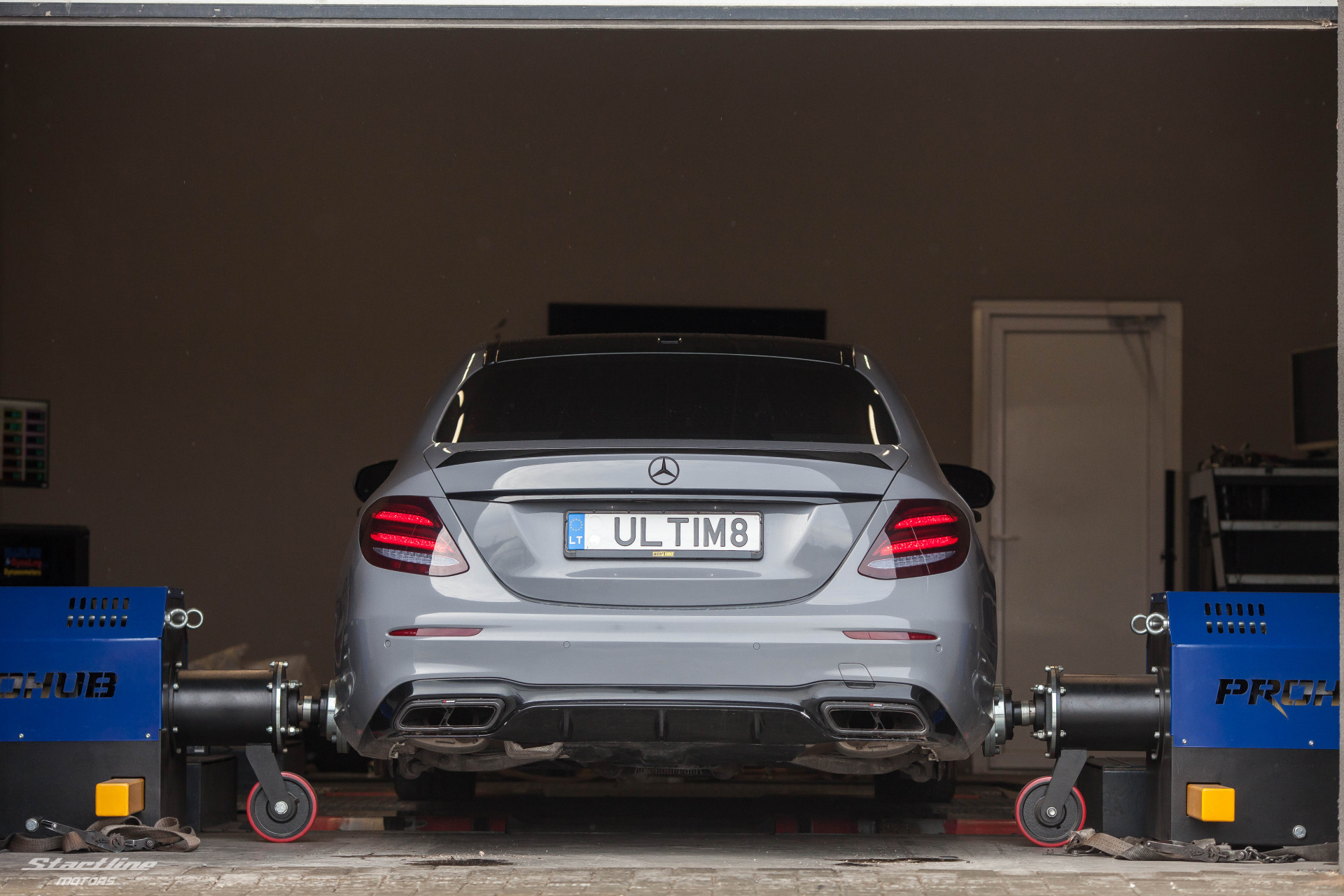
We can verify results on our MAHA LPS 3000 or Mainline ProHub 2000. Comparisons depend on conditions, method and whether output is at the wheels, hubs or calculated at the engine. Indicative figures and modelled curves in the vehicle selector are not an individual car’s dyno test report.
After tuning
We agree on fuel, use and maintenance recommendations. Correct oil, filters, ignition, fuel system condition and timely transmission servicing remain essential. Allow the engine and oil to warm before applying high load.
Lower fuel consumption is not guaranteed. It depends on driving, route and use of the additional power. More power under load generally needs more fuel. We discuss driveability, output and economy expectations separately.
Include make, model, year, engine, transmission, modifications and fuel in your enquiry. Existing diagnostic data or a dyno test help define the scope. Price and likely results are discussed after assessing the car.
- Condition and exact engine-version assessment
- Calibration for hardware, fuel and intended use
- ECU and transmission torque-management checks
- Assessment using live data and agreed measurements
- Operating and maintenance recommendations